

Ferm Living Tarn Dining Table - 220
TARN DINING TABLE - 220
TARN DINING TABLE - 220
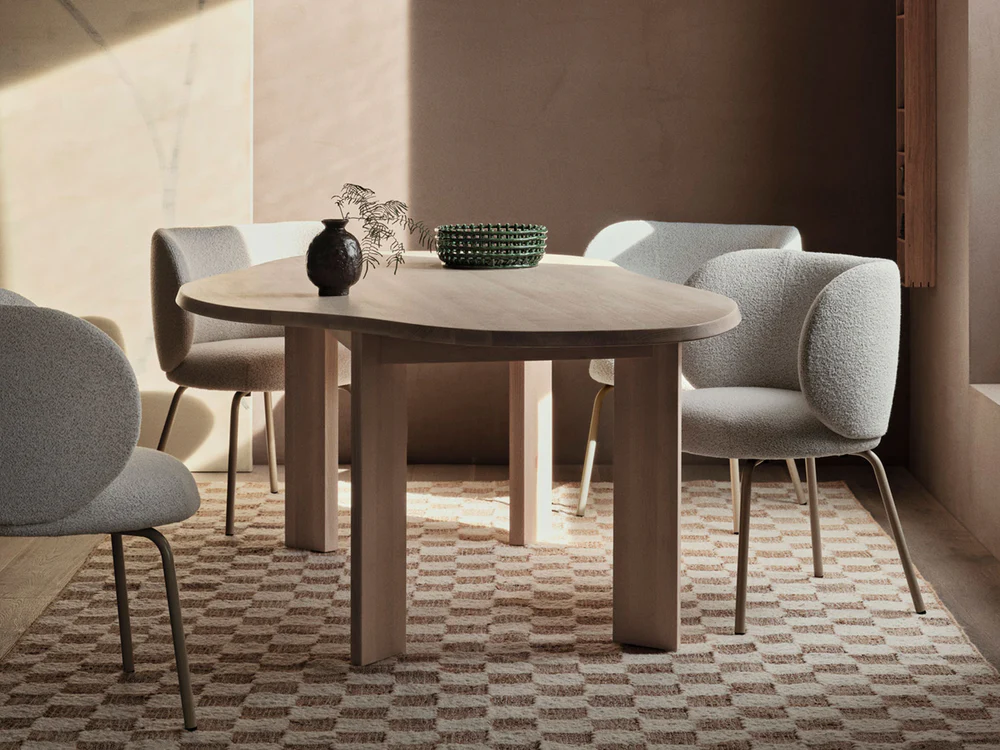
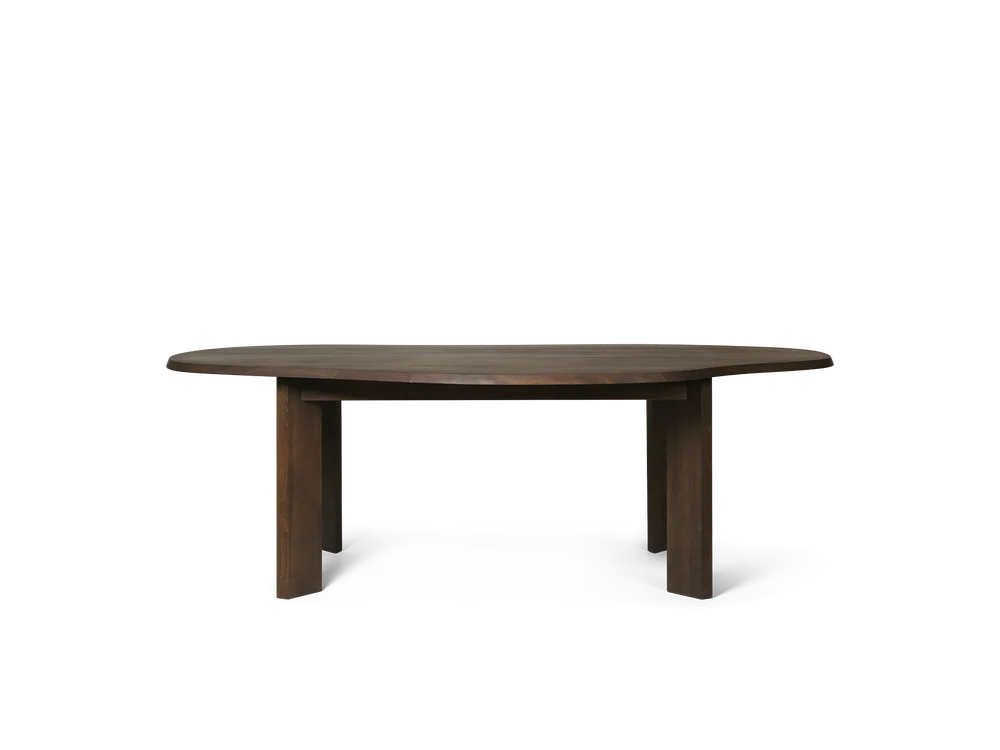
The Tarn Dining Table is meticulously crafted from solid, FSC™ certified beech wood.
INFORMATION
PRODUCT TYPE
Dining Table
ITEM NO.
1104268362
BRAND
Ferm Living
COLLECTION
Tarn
ATTENTION
Always use coasters or other protective items with a soft surface to avoid damage to the product. Never leave wet items on wood as it may cause stains or leave permanent marks
DOWNLOAD
↓ Data Sheet
MATERIAL
FSC™ certified solid beech. Oiled
PRODUCTION
Made in Croatia
INFO
Registered design
CARE INSTRUCTIONS
Wipe with a damp cloth. Do not leave the surface wet. Treat with oil when needed
TEST
EN 15372:2016, Furniture - Strength, durability and safety - Requirements for non-domestic tables
DIMENSIONS
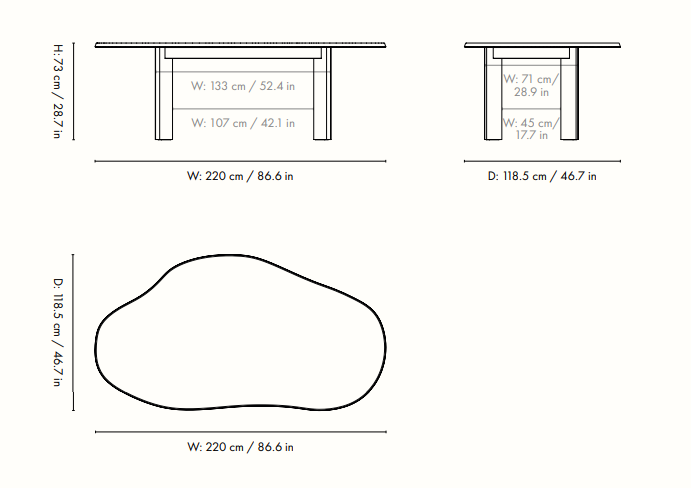
- Height : 73 cm (28.7 in)
- Depth : 118.5 cm (46.7 in)
- Width : 220 cm (86.6 in)
SHAPE
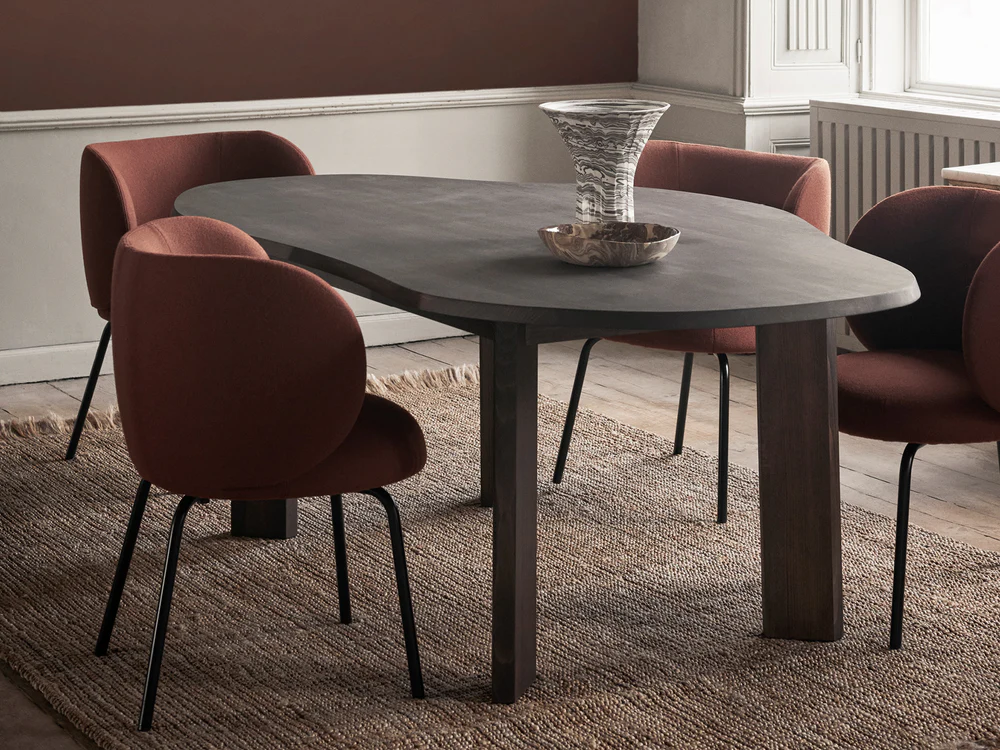
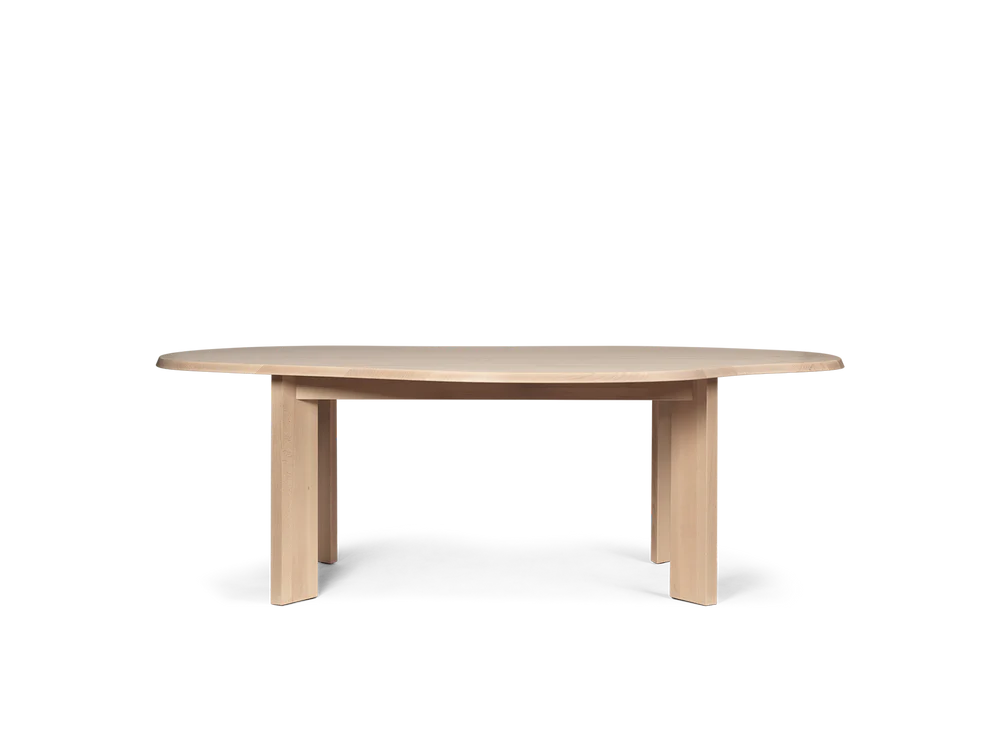
Organic shape, beautifully contrasted by a beveled edge and four broad, linear legs, creating a visually striking piece
DETAIL
The table showcases a fluid and organic shape, beautifully contrasted by a beveled edge and four broad, linear legs, creating a visually striking piece. Perfect for your dining area or kitchen, it effortlessly sets a warm and cozy ambiance for your meals.
WEIGHT
57 kg
PACKSIZE
1
COLORS
- White Oiled Beech
- Dark Stained Beech
FSC™-CERTIFIED
FSC™ stands for the Forest Stewardship Council and is an international, non-profit labelling scheme for wood and paper. In FSC™ forestry, no more wood is felled than the forest can naturally reproduce. At the same time, FSC™ is a guarantee that people who work within the entire supply chain are treated legally and ethically, and that animals and plant life are protected.
INSTRUCTIONS
WOOD FURNITURE INSTRUCTIONS
Wood is a natural material – no two pieces of wood are the same – which is why there are no two identical pieces of wooden furniture. Wood is constantly changing, which means that its structure and colour evolve over time. The biggest changes occur at the beginning of a piece of furniture’s life.
Solid wood is mainly affected by seasonal changes in humidity. During the summer, wood expands and may cause tabletops to bow slightly. During the winter, the wood contracts again.
. During the summer, wood expands and may cause tabletops to bow slightly. During the winter, the wood contracts again. Wood movement – expanding and contracting – can cause ’checks’ (small splits and cracks between the wood’s veins) to appear
However, these do not damage the product and can usually be treated with a wood oil treatment. To maximise the lifespan of wooden furniture, it is important to ensure that it is continuously cared for and maintained. Below are guidelines on how to best treat and maintain your furniture made of solid wood.
Wood movement – expanding and contracting – can cause ’checks’ (small splits and cracks between the wood’s veins) to appear. However, these do not damage the product and can usually be treated with a wood oil treatment.
To maximise the lifespan of wooden furniture, it is important to ensure that it is continuously cared for and maintained. Below are guidelines on how to best treat and maintain your furniture made of solid wood.
Using a neutral wood oil will help the wood retain its original colour, give it a water-repelling effect, and prevent it from drying out. Apply oil with a soft sponge or soft, lint-free cloth in the direction of the wood grain in a continuous thin layer.
Allow the oil to dry then wipe with a soft, lint-free cloth to remove any excess oil. Daily cleaning (wiping the surface after a meal, for example) slowly removes oil from the wood, which is why it is recommended that you treat the wood 4–6 times a year or as needed. Please read the instructions on the bottle before treatment.
For a more thorough clean of your wooden furniture, you should use a wood cleaner, which removes marks like oil-based stains, water rings and more. It can also be used to wash tannic acid out of oak wood.
Remember to treat the surface with neutral wood oil after using wood cleaner. Always remember to treat the underside of your furniture; otherwise, there is a risk that the wood will warp or crack.
If the surface of the wood ‘rises up’ (becomes rough) after treatment, you can lightly sand it in the direction of the wood grain using fine sandpaper (minimum 200 grit). Never use steel wool!
