

Vitra Heart Cone Chair, Anniversary Edition
HEART CONE CHAIR, ANNIVERSARY EDITION
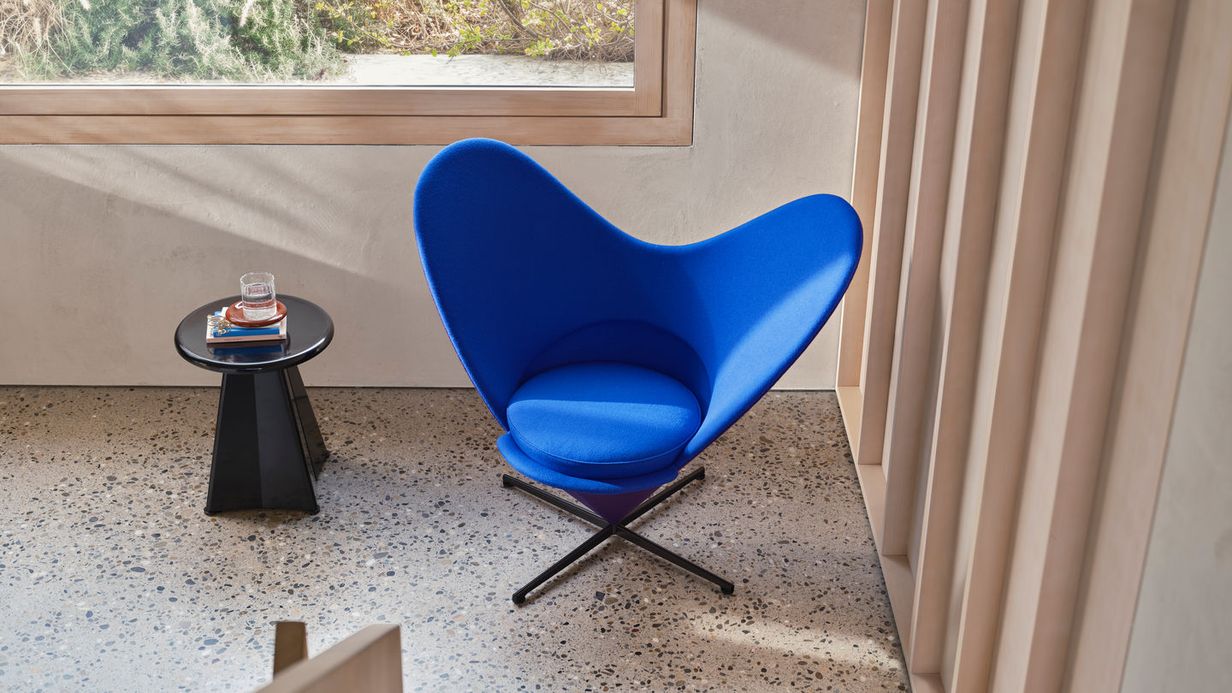
HEART CONE CHAIR, ANNIVERSARY EDITION
Designed By Verner Panton
In 1957, Danish architect and designer Verner Panton was commissioned by his father to design an extension to the restaurant Kom Igen in Denmark's Langesø Park.
Granted complete creative freedom, Panton conceived every element of the interior – from textiles, carpets, lighting and furniture to staff uniforms and menus.
The furnishings for the project also included a chair: the Cone Chair, shaped like an inverted cone. Its padded, curved shell forms the seat, backrest and armrests.
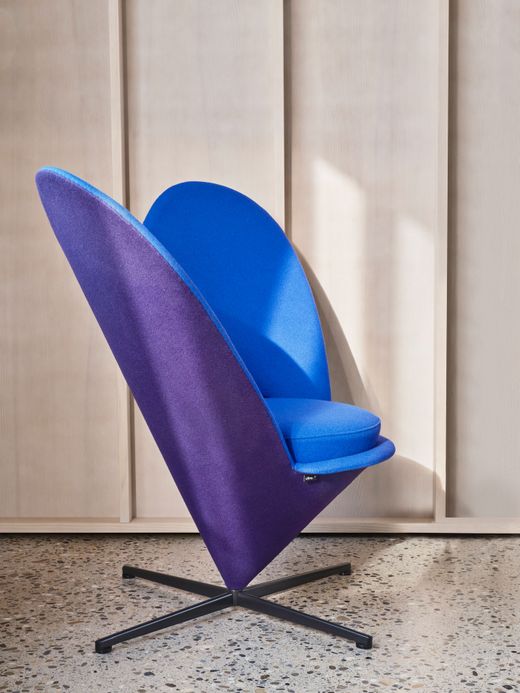
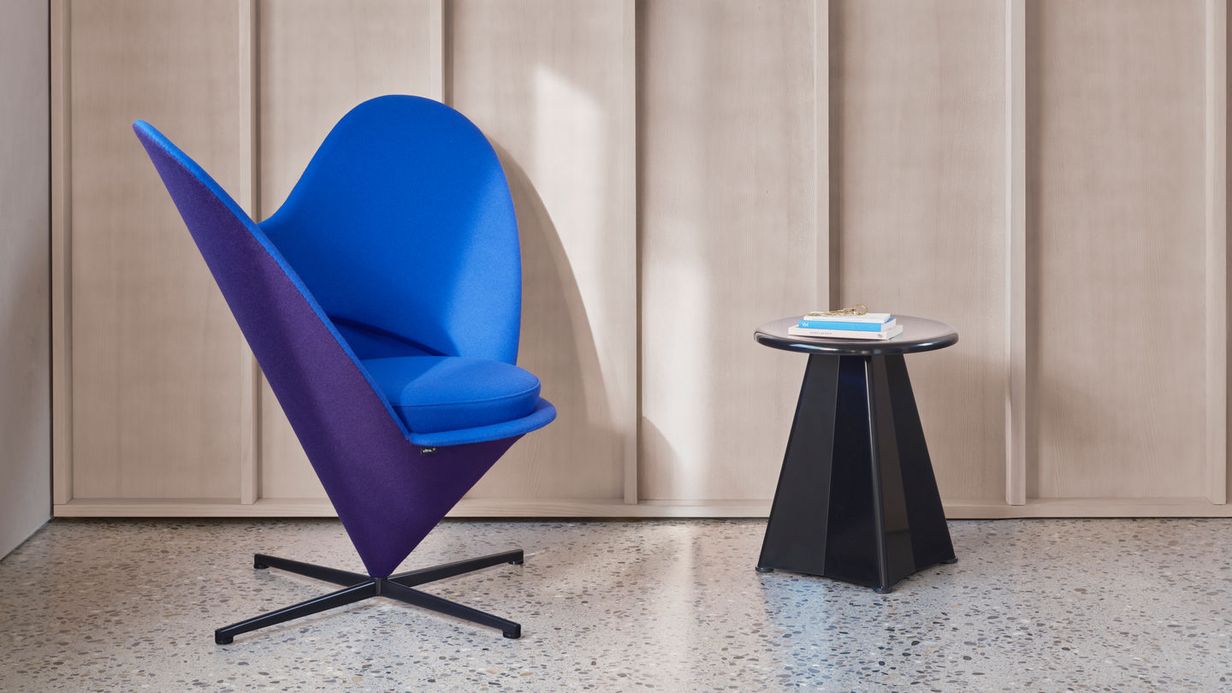
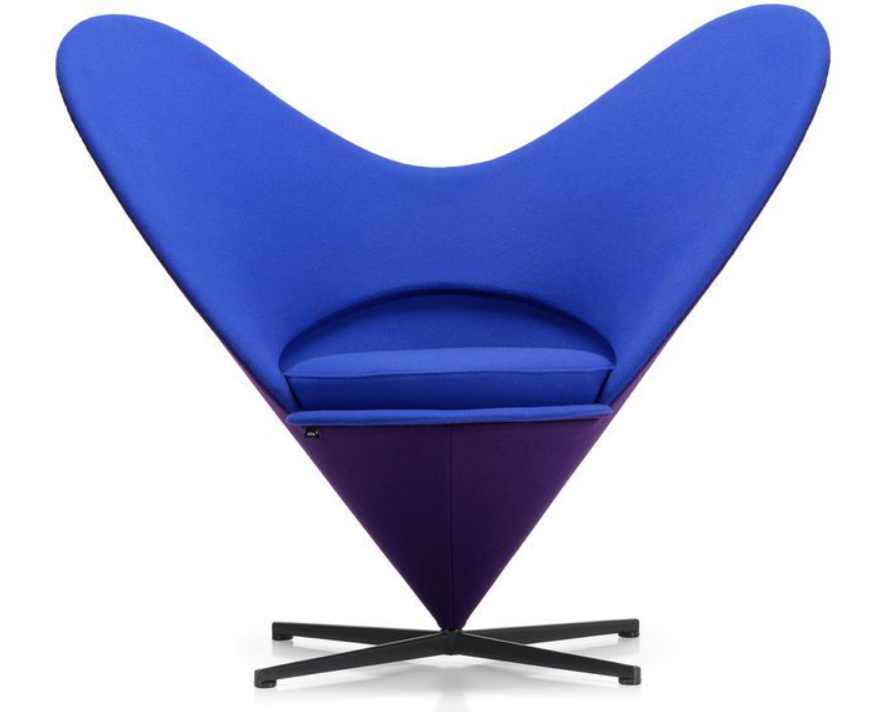
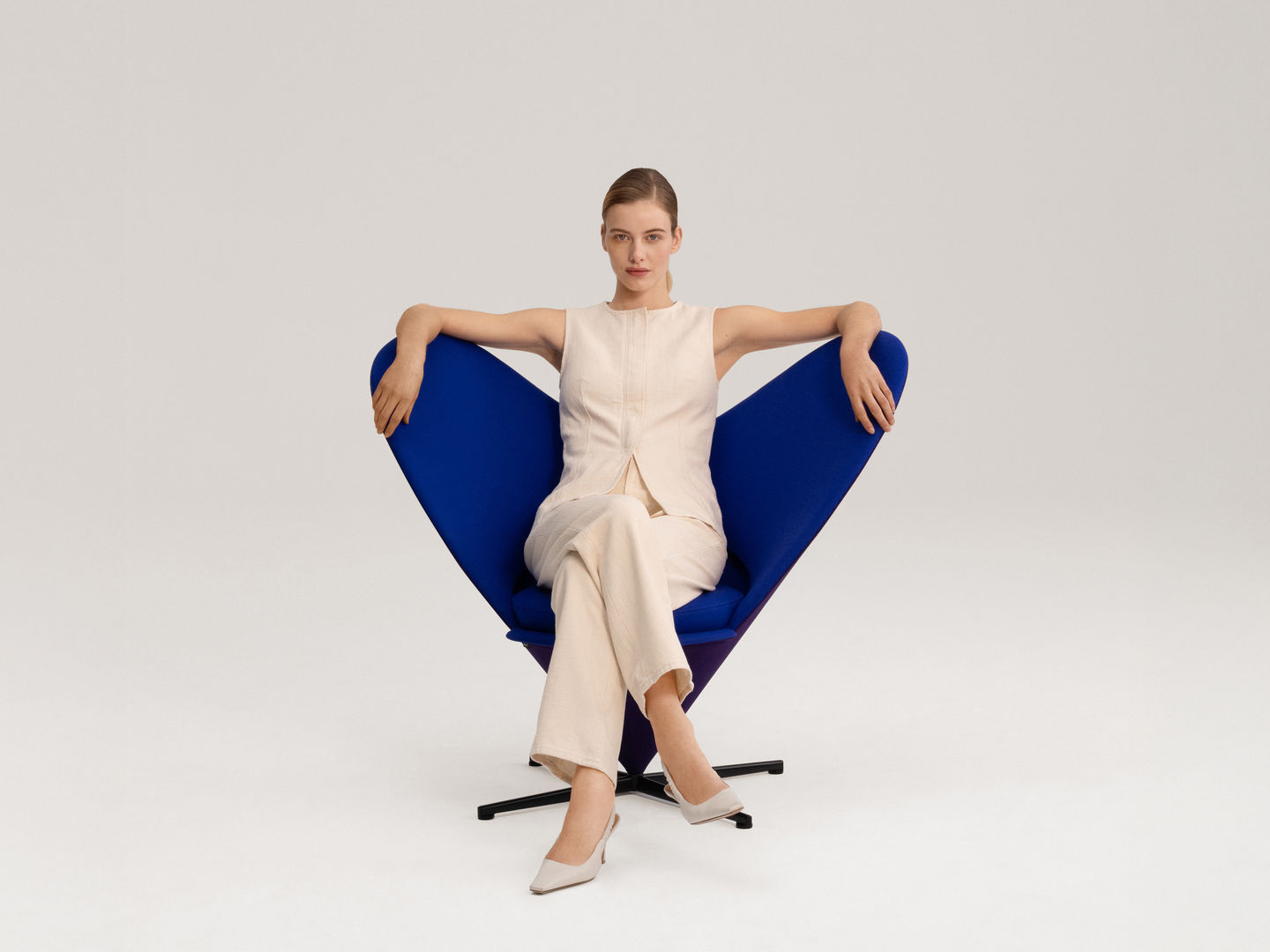
Shortly thereafter, Panton developed this concept further with the Heart Cone Chair. Its expansive heart-shaped backrest ensures comfort and ease of movement combined with an iconic silhouette.
DESIGNER
VERNER PANTON
The visionary and innovative architect/designer Verner Panton shook up the canons of Scandinavian design as early as the 1960s.
Born in 1926 in Brahesborg-Gamtofte on the island of Fünen, Denmark, he obtained his degree in architecture from the Royal Academy of Arts in Copenhagen in 1951.
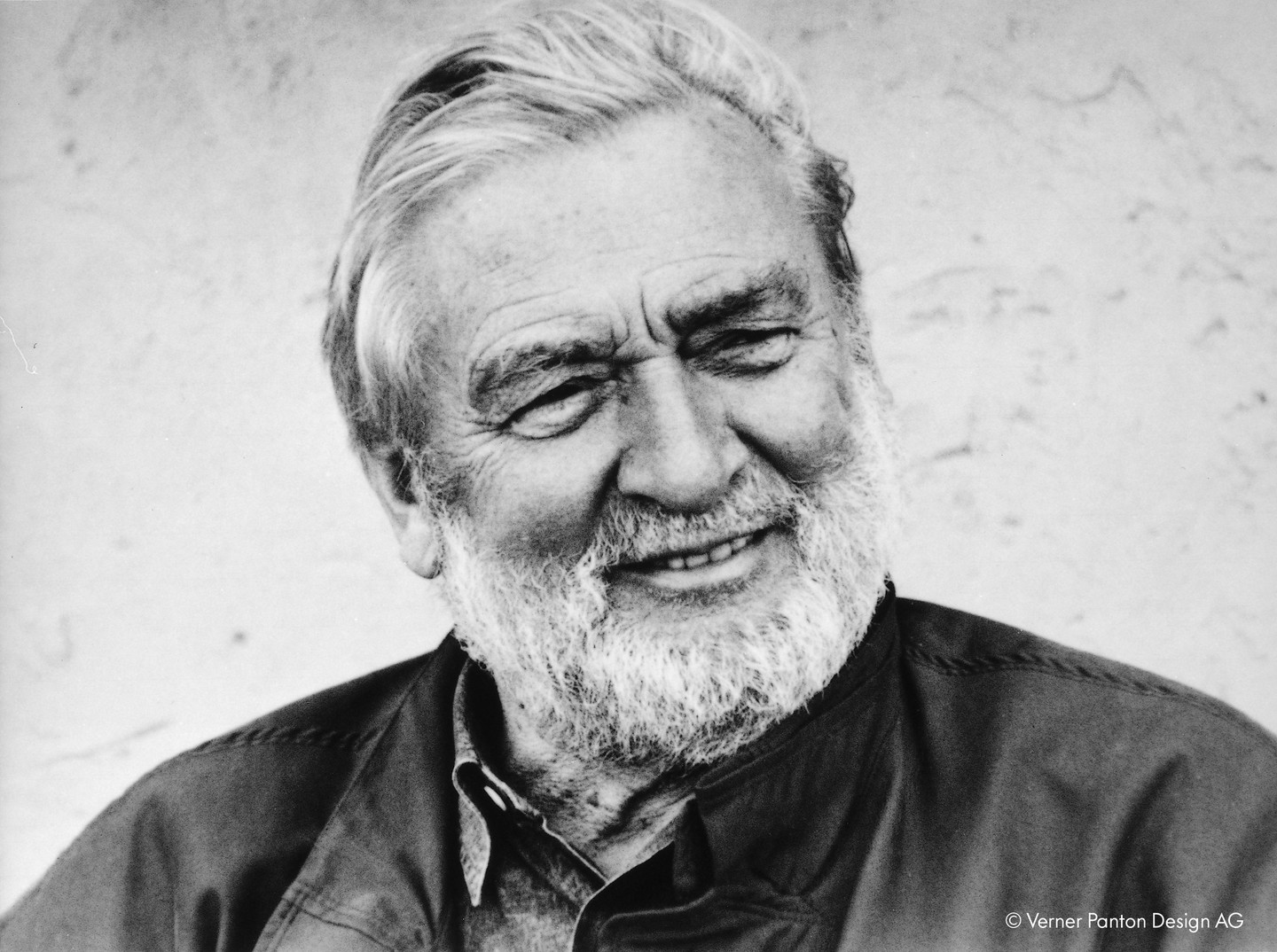
He began his career by working for renowned architect Arne Jacobsen, but his restless nature led him to travel across Europe in a van converted into a mobile studio. Returning to Denmark in 1958, Panton used what he learned in his travels to renovate the Kom-igen restaurant, run by his parents.
The use of bright colours, predominantly red, the subdivision of the main room using a system of hanging panels in a geometrically patterned fabric, and the creation of the Cone seat with its futuristic and sculptural shape caused a sensation in a context then dominated by minimalist aesthetics, natural materials and light colours.
The project aroused the interest of the Danish brand Plus-Linje, which produced the Cone Chair in five shades of red, followed by the steel-framed Wire Cone Chair, the Heart Cone Chair, the Cone Footstool and the Cone Table.
As is often the case with the forerunners of a new style, Panton struggled to establish himself in the industry until the Danish furniture magazine Mobilia published his work in 1961, marking a turning point in his career.
In 1967, the famous S Chair, better known as the Panton Chair, was created using the innovative one-piece injection moulding technique; Panton had already conceived this chair/sculpture in the late 1950s, but its realisation was not technically feasible at the time. Verner Panton's language is characterised by an almost reckless use of colour, psychedelic atmospheres and fluid, sculptural forms.
The manifesto of his optimistic vision of the future, in which good design is accessible to all, was the Visiona 2 exhibition, organised by Bayer for the 1970 Cologne Furniture Fair.
Verner Panton collaborated with various brands throughout his career, for example, Vitra, Fritz Hansen, Ikea, and Swatch, for whom he created installations and extraordinary design objects. He designed Flying Chair and the Fun series of lamps for Verpan and the Panthella lamps for Louis Poulsen.
Panton also collaborated on architectural projects, including portions of the Spiegelverlagshaus Hamburg headquarters (1969); Gruner & Jahr offices, also in Hamburg (1974); the Erco offices in London (1997).
He received numerous prizes and awards, including the International Design Award in 1963 and the Knight's Cross of the Order of Dannebrog, awarded by the Queen of Denmark in 1998, the year of his death.
INFORMATION
BRAND
Vitra
PRODUCT TYPE
Fabric Armchair
BODY
GRP (glass-fibre reinforced plastic laminate).
PRODUCTION
Made in Switzerland
COLLECTION
Cone
DETAIL
To celebrate what would have been Verner Panton’s 100th birthday on 13 February 2026, Vitra and Verner Panton Design AG are launching a limited edition of the Heart Cone Chair in a duo-tone version. TThe front and back of the chair are finished in two different colours, blue and purple, adding extra vitality to its already expressive form and making the Heart Cone Chair the centrepiece of any interior.
DIMENSIONS
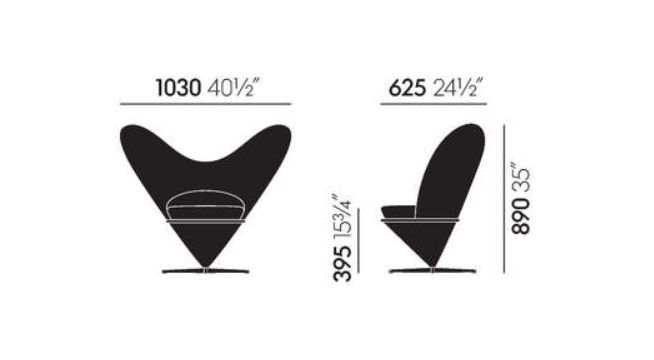
- Height : 890 cm (35")
- Width : 1030 cm (40 1/2”)
- Depth : 625 cm (24 1/2”)
- Seat Height : 395 cm (15 3/4")
COVER
The Divina fabric by Kvadrat is produced by weaving the yarn into a coarse linen casing, which is then mechanically processed and dyed at very high temperatures. This results in a smooth, uniform surface with properties very similar to felt.
SEAT HEIGHT
395 mm (380 mm with applied load, measured in accordance with EN 1335-1:2000).
BASE
Cruciform base in stainless steel, powder-coated finish (with black plastic glides).
UPHOLSTERY
Polyurethane foam padding. With seat cushion, replaceable.
DESIGN
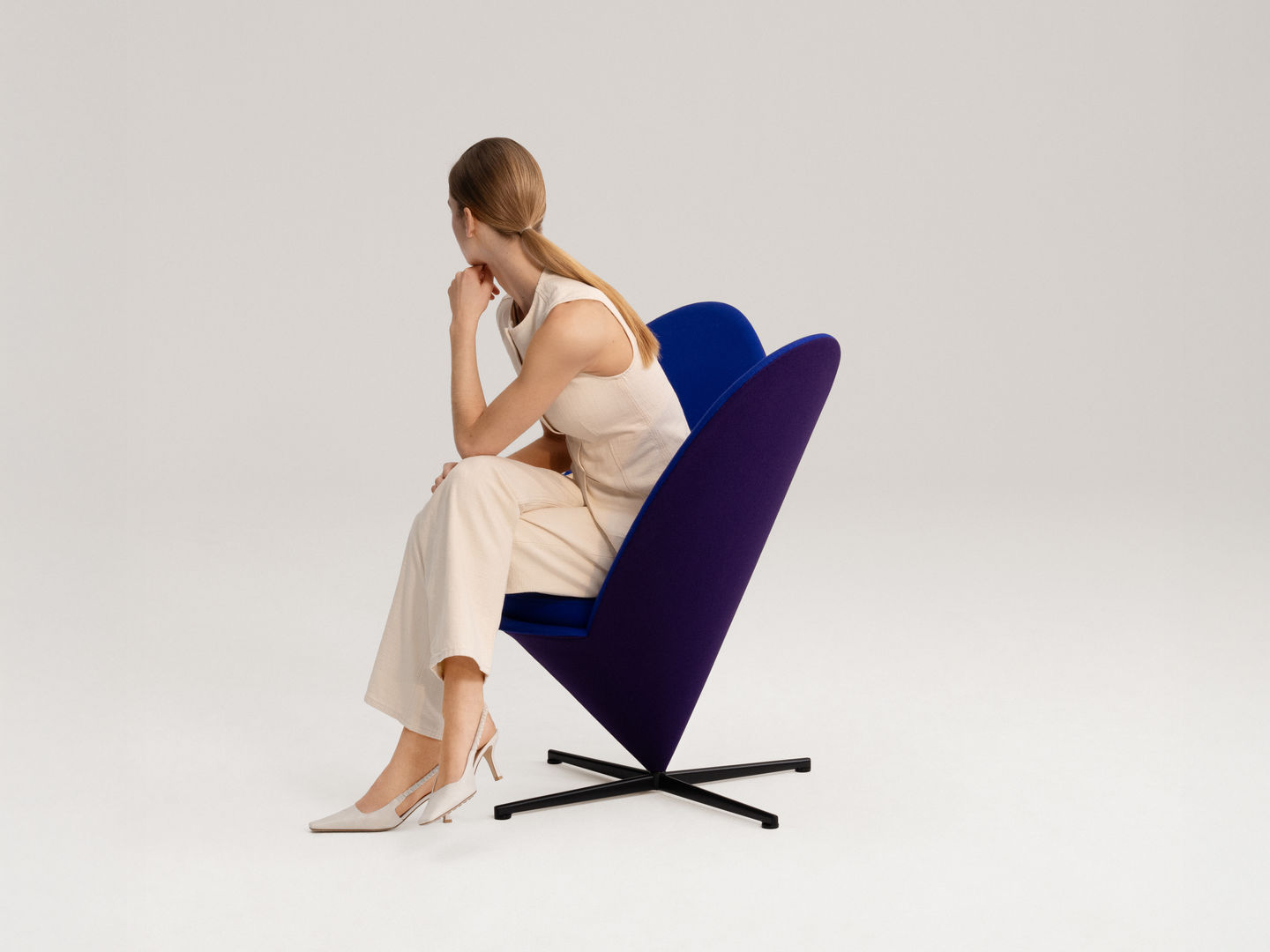
The design exemplifies Panton’s fascination with geometry and his aim to unite functionality with emotional impact. The Cone Chair and the Heart Cone Chair soon became icons of modern design, embodying Panton’s distinctive aesthetic language.
COLOURS AND MATERIALS
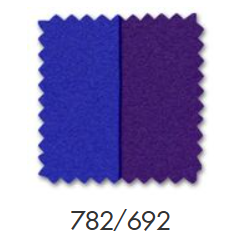
- Kvadrat Divina 3 : 782/692
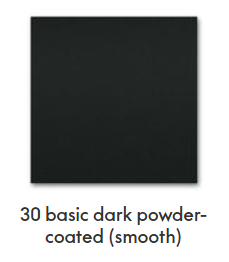
- Base : 30 basic dark powder-coated (smooth)
FEATURES
In the early 1960s, Vitra began collaborating with Verner Panton to develop and realise his idea for a cantilever chair made from a single material and formed in one piece — the revolutionary Panton Chair. This partnership continues to this day: Vitra maintains a close relationship with the Panton family and, in cooperation with the rights holder Verner Panton Design AG, is dedicated to preserving and further developing selected works by the visionary designer.
