
Henge Cage B Bookcase
CAGE B BOOKCASE
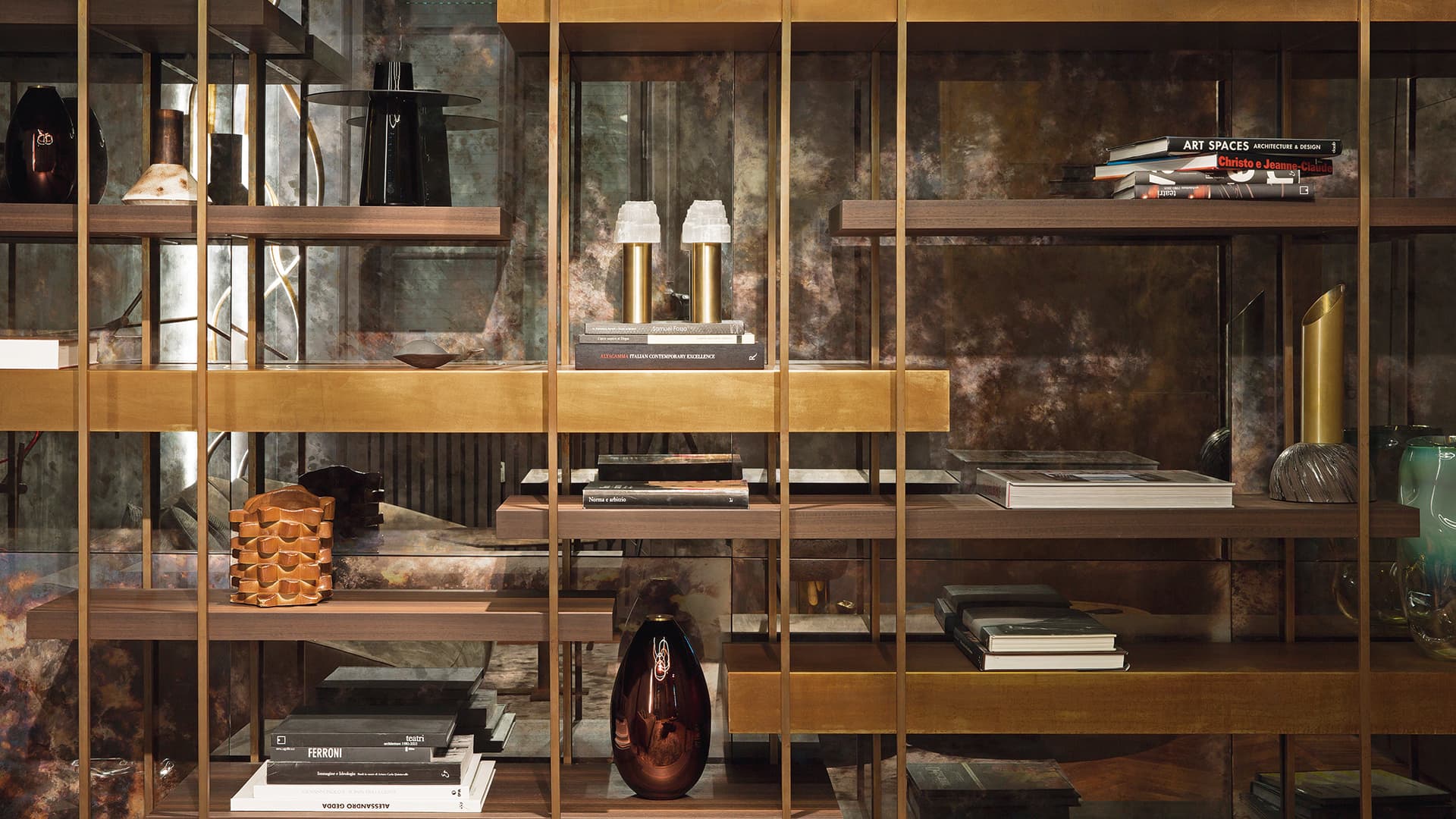
CAGE B BOOKCASE
Designed by Massimo Castagna
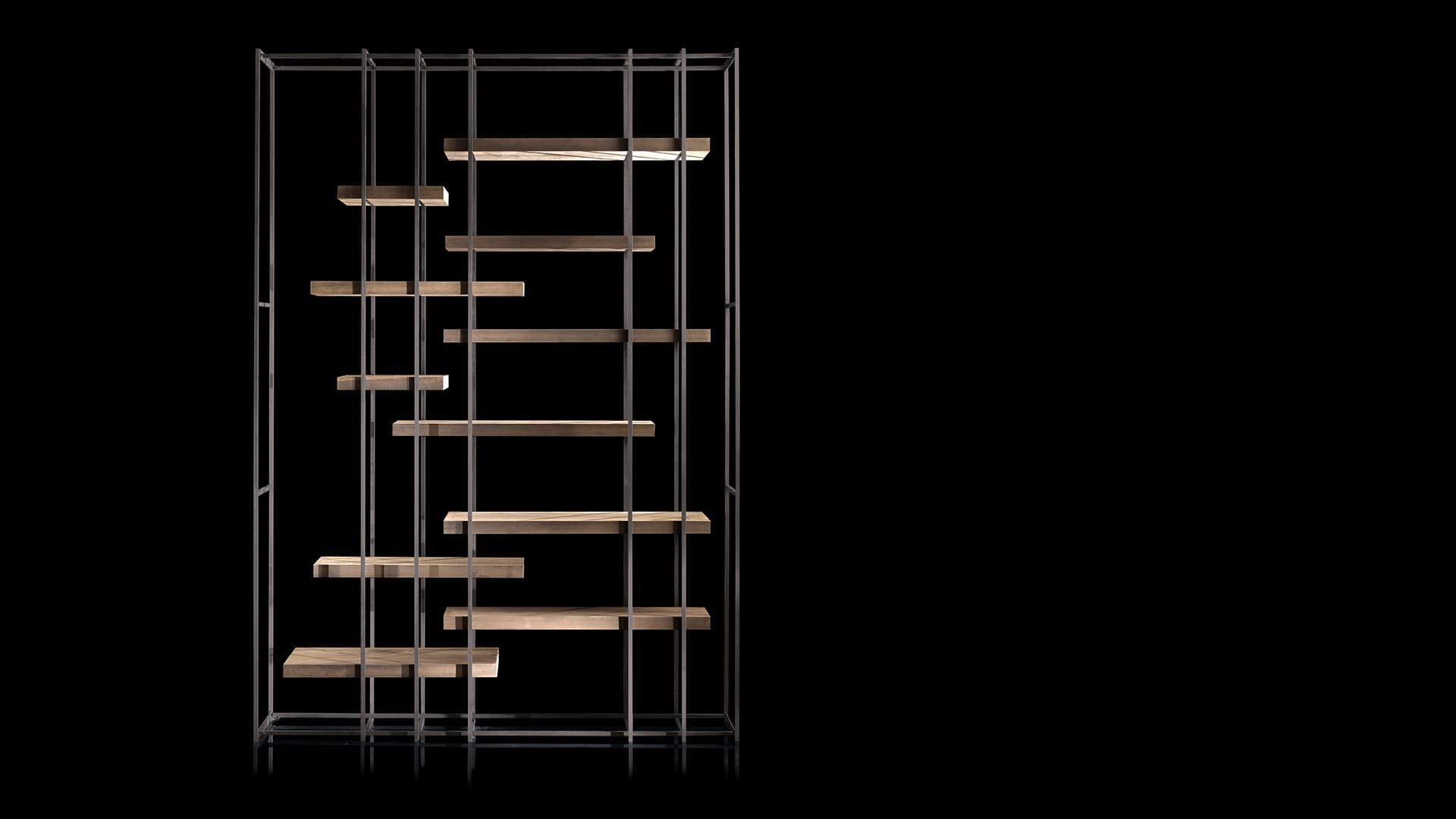
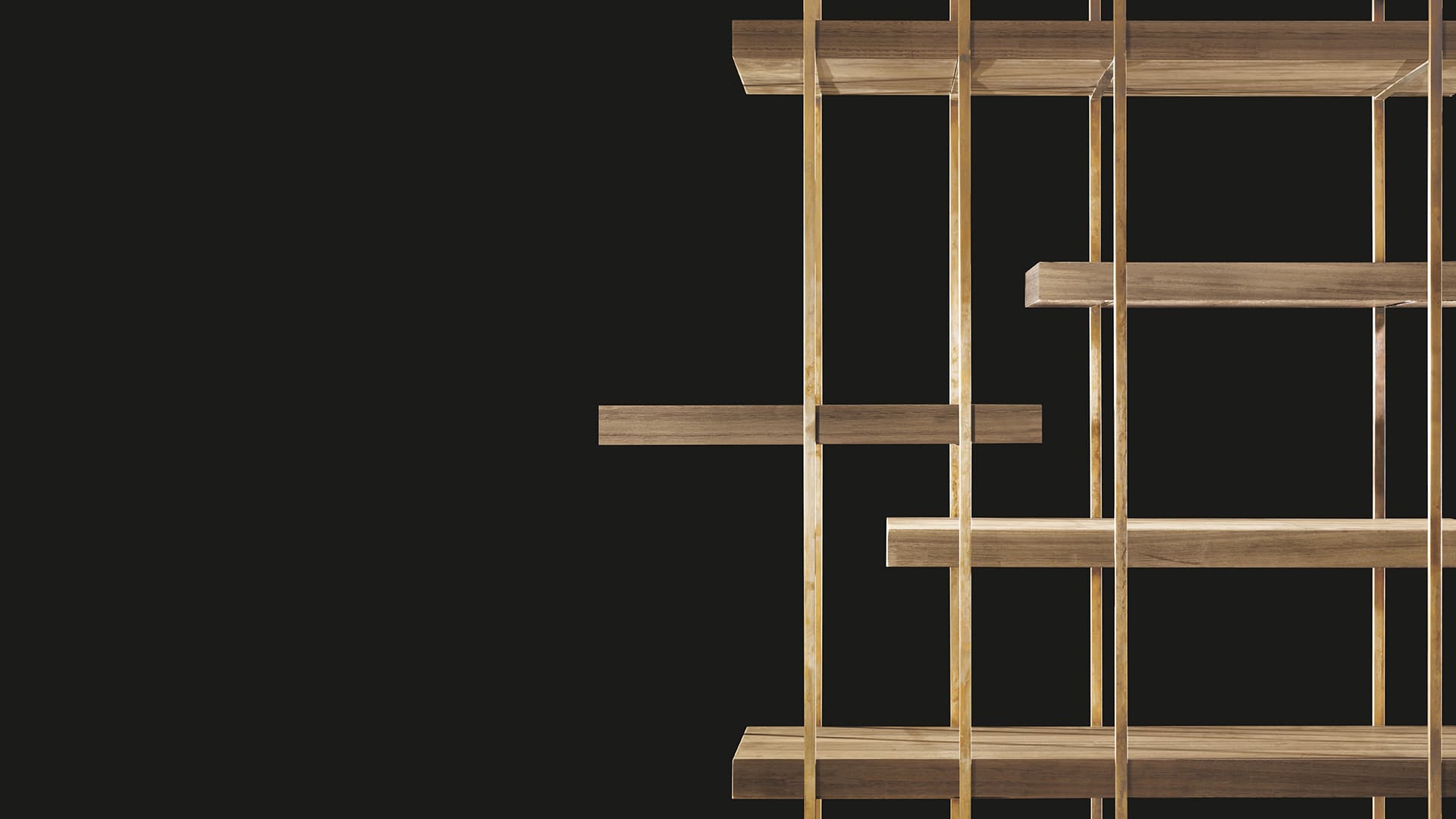
A blend of essential elements, combined with eclecticism and rhythmicity, marks the personality of Cage B, a vigorous and dynamic double-sided presence that enhances the rigor of a rational elegance, without dividing but allowing the environments to dialogue.
DESIGNER
MASSIMO CASTAGNA
Henge started working with the architect and designer Massimo Castagna, back in 2011, and collection after collection this cooperation continues to strengthen the unique identity of the brand.
Born on 13 November 1957, he graduated in architecture in 1984 from Milan Politecnico; he began his professional activities in 1986, founding the studio AD Architettura.

He has gained considerable professional experience in the field of architecture, residential and commercial buildings, upgrading and conservative restoration, hotels, interior design, art direction, and design in the furnishing sector, consultancy, projects, and the design supervision of furnishing point-of-sales.
One of his major creations has been the “Piramide” laboratory the Everest-K2-CNR scientific committee for the Italian National Research Council, which was built in Nepal in 1991 at an altitude of 5050 m., to be used as a high-altitude research laboratory, a project selected for the 18th Milan Triennale.
INFORMATION
BRAND
Natevo
COLLECTION
Cage B
PRODUCT TYPE
Bookcase
ENVIRONMENT
Indoor
FRAME
- 1.5 cm thick.
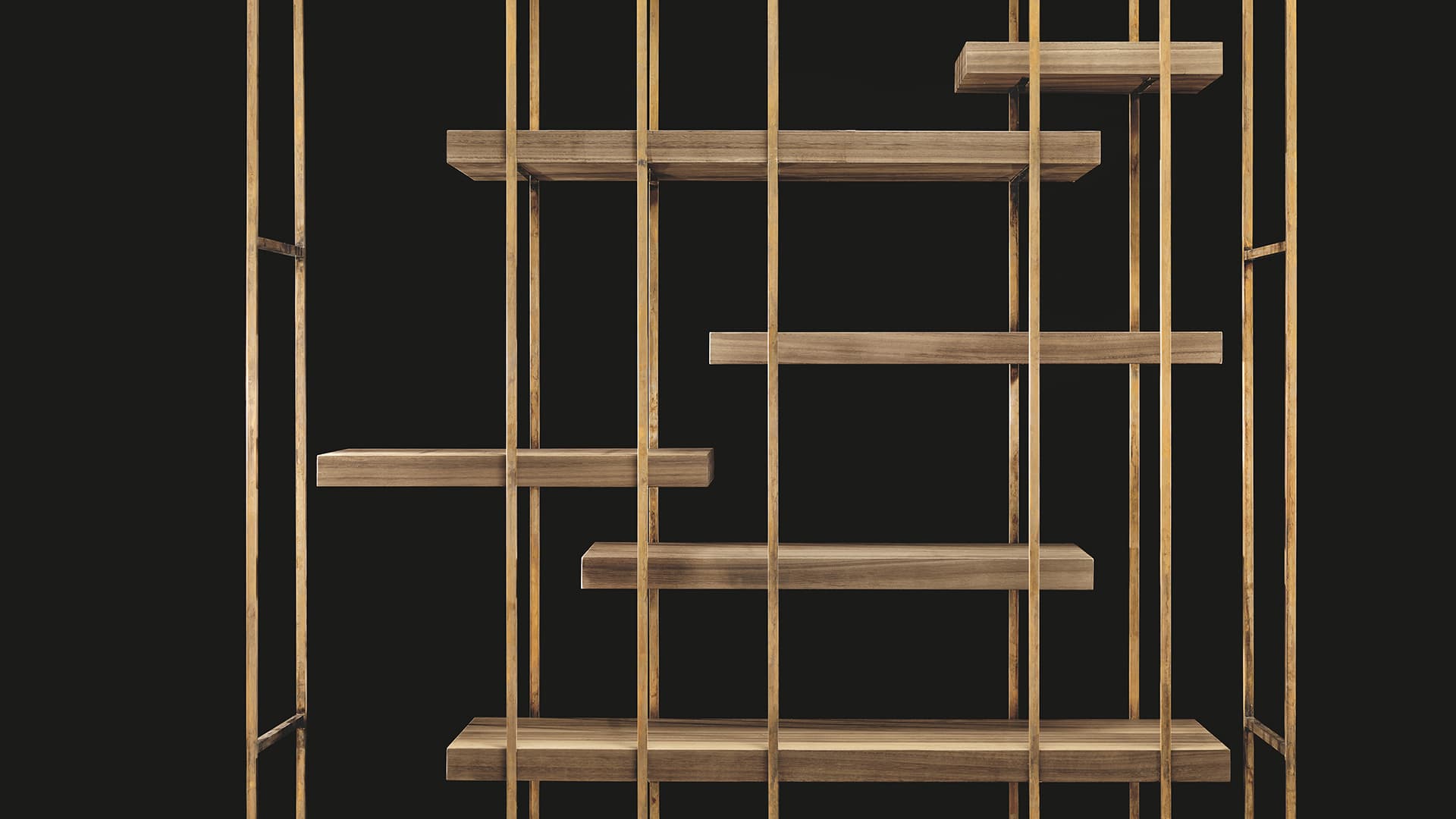
- Steel or brass hutch.
USE
Interior Furniture
PRODUCTION
Made in Italy
ITEM
Decorative
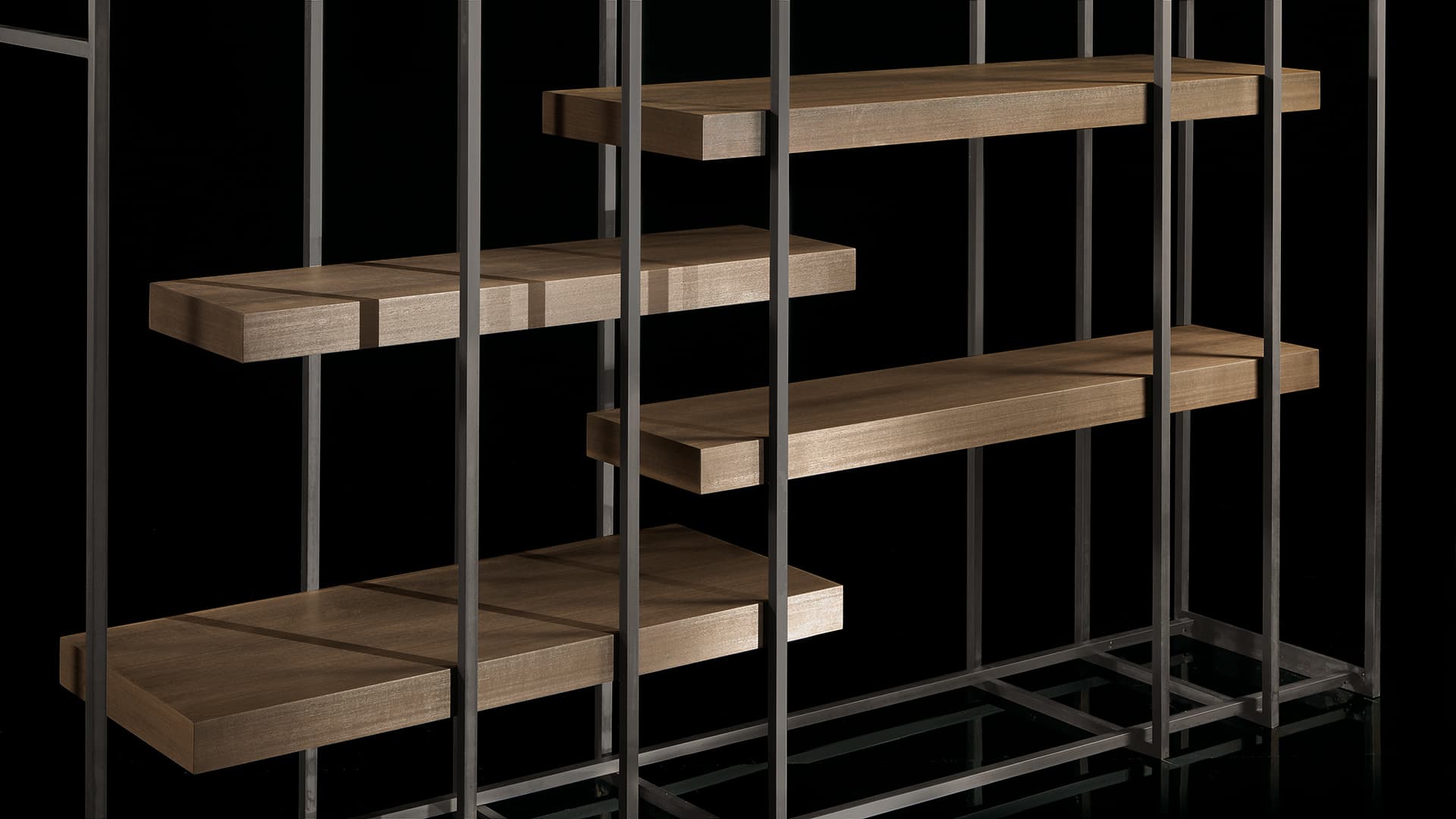
SHELVES
Fitted with plywood
FINISHES
Heat-Treated and swamp wood finishes.
SHELVE THICKNESS
5 cm
DESIGNER
Massimo Castagna
DOWNLOADS
↓ Images
↓ Data Sheet
DETAIL
This item is carefully crafted by skilled artisans, who devote meticulous care to its creation. As a result of its handmade and hand-finished nature, variations in the marble, metal, or woodwork are to be expected and celebrated. Each item is unique and possesses its individuality, ensuring that no two items are exactly alike.
CARE AND MAINTENANCE OF WOOD
The woods used for our products are of the highest quality and manufactured with the greatest craftsmanship. As wood is a natural material, when placed in a very dry environment it loses humidity and consequently shrinks. In contrast, in a very humid environment wood acquires humidity, increasing in size.
These subtle reactions are not flaws but natural movements of a ‘living’ product, which expands and contracts as the seasons change. Furthermore, the final moisture content of wood also varies according to use, for which particular care is required. For routine maintenance of wood, use a soft, damp, fluffy cloth, or a microfiber cloth. Stubborn stains cleaning wood and does not scratch.
To thoroughly clean even the finest grain, follow the direction of the grain using a neutral pH detergent. Next, rinse with a well wrung out cloth and thoroughly dry all surfaces. It is advisable to use neutral pH products and to always test any product on a small hidden part of the object before using it on the outside. To apply the rejuvenating oil provided, carefully follow the instructions printed on the packaging. Bear in mind, however, that the treatment does not make the surface immune to the effects of acidic substances (such as lemon juice).
DIMENSIONS
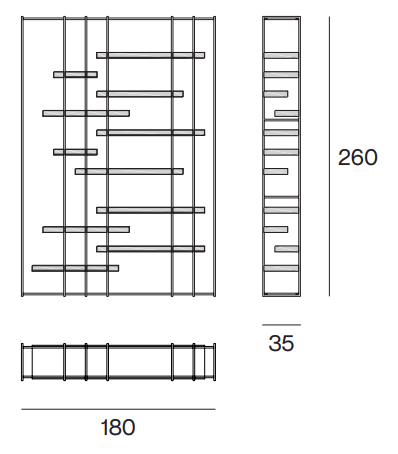
DIMENSIONS - 1
- Width : 180 cm
- Depth : 35 cm
- Height : 260 cm
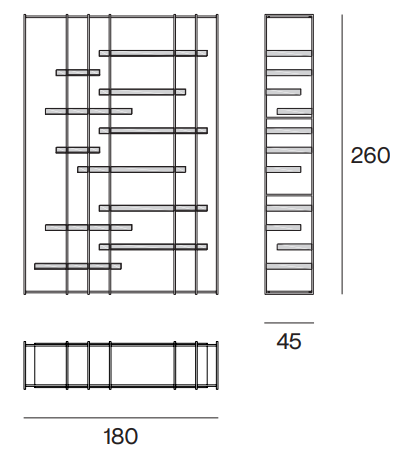
DIMENSIONS - 2
- Width : 180 cm
- Depth : 45 cm
- Height : 260 cm
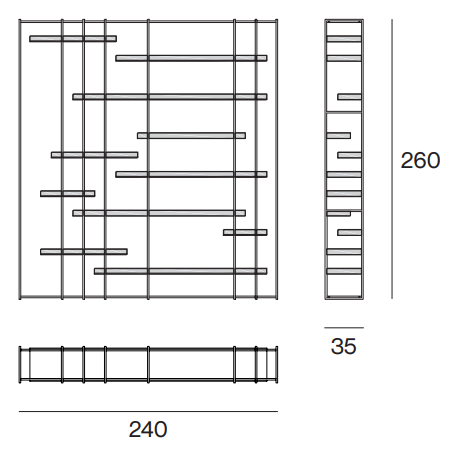
DIMENSIONS - 3
- Width : 240 cm
- Depth : 35 cm
- Height : 260 cm
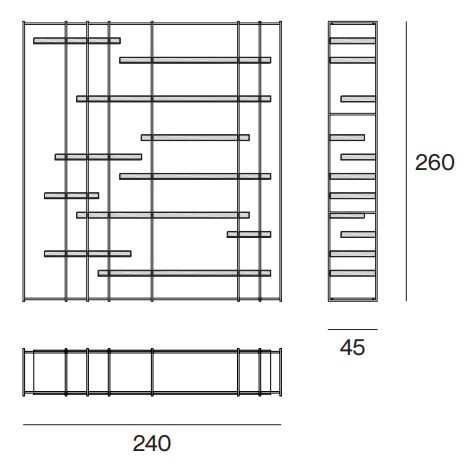
DIMENSIONS - 4
- Width : 240 cm
- Depth : 45 cm
- Height : 260 cm