

Fontanaarte Teso – Library Consolles And Bookcases
TESO – LIBRARY CONSOLLES AND BOOKCASES
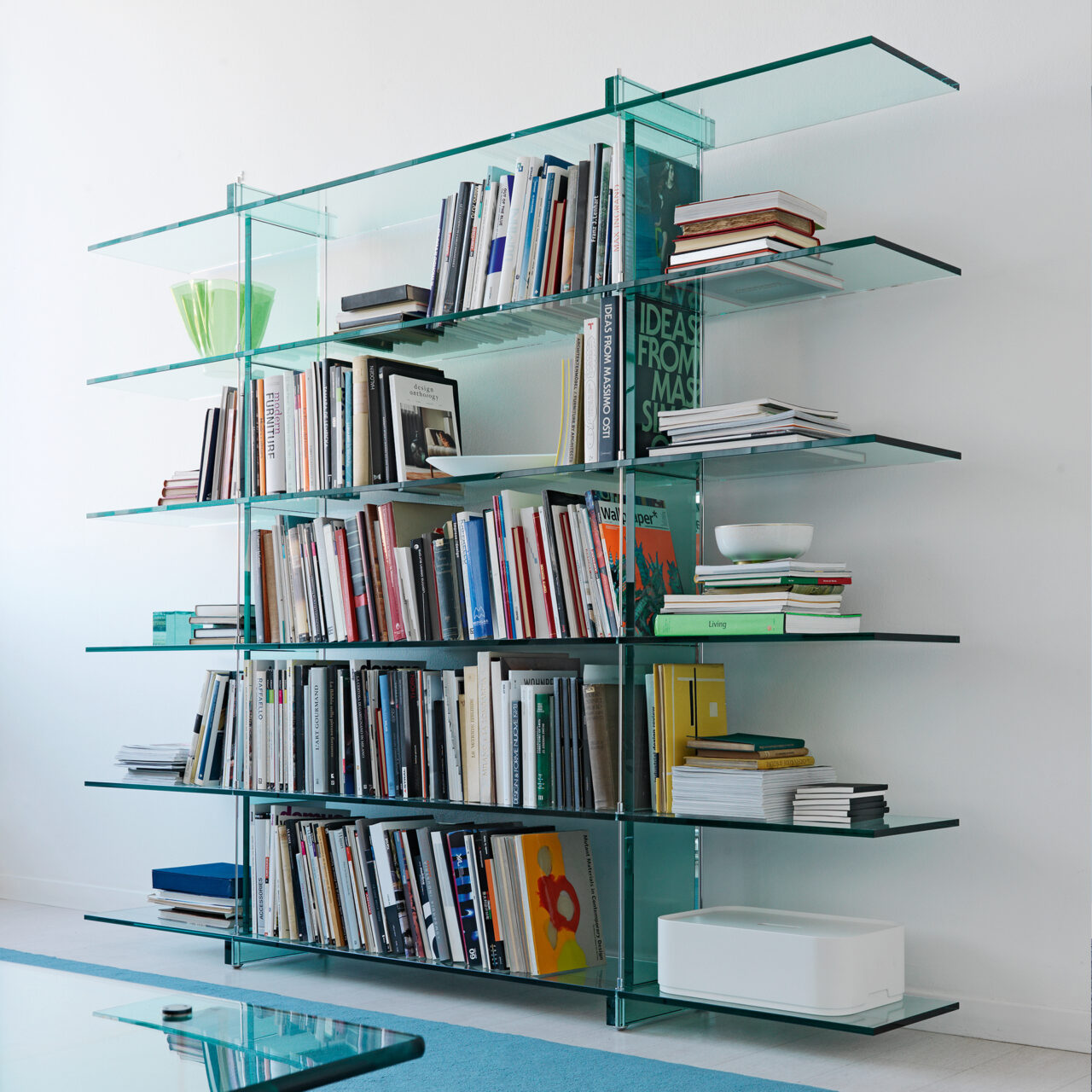
TESO – LIBRARY CONSOLLES AND BOOKCASES
Designed by Renzo Piano
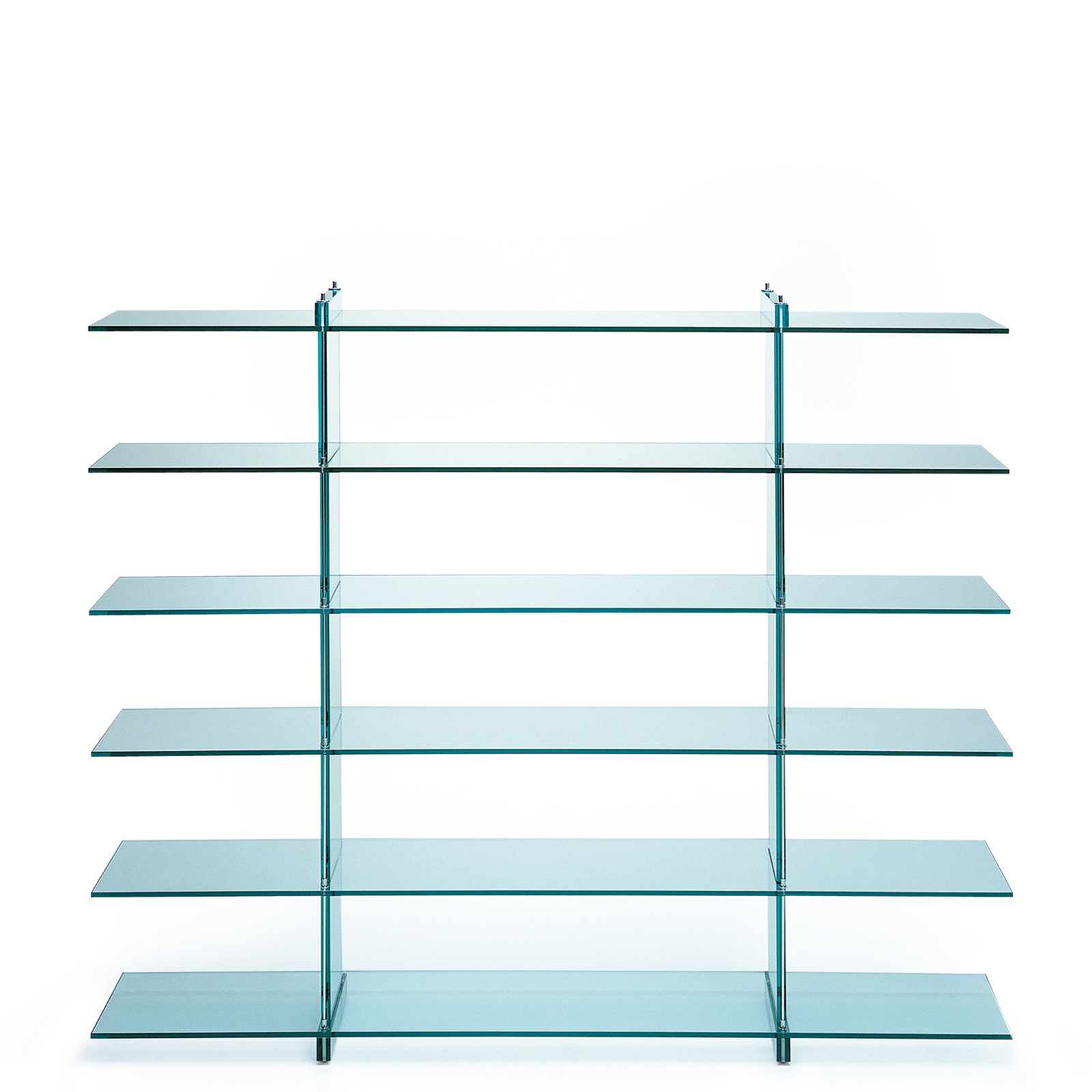
A unique case in the international design landscape, the Teso series designed by architect Renzo Piano represents the only collection of objects he has signed for serial production. The name itself, Teso, directly alludes to the structural principle that governs its functioning.
DESIGNER
RENZO PIANO
He graduated in 1964 from the Milan Polytechnic.
As a student, he worked at the firm of designer Franco Albini and made regularly visits to his father’s building sites, where he gained valuable practical experience.
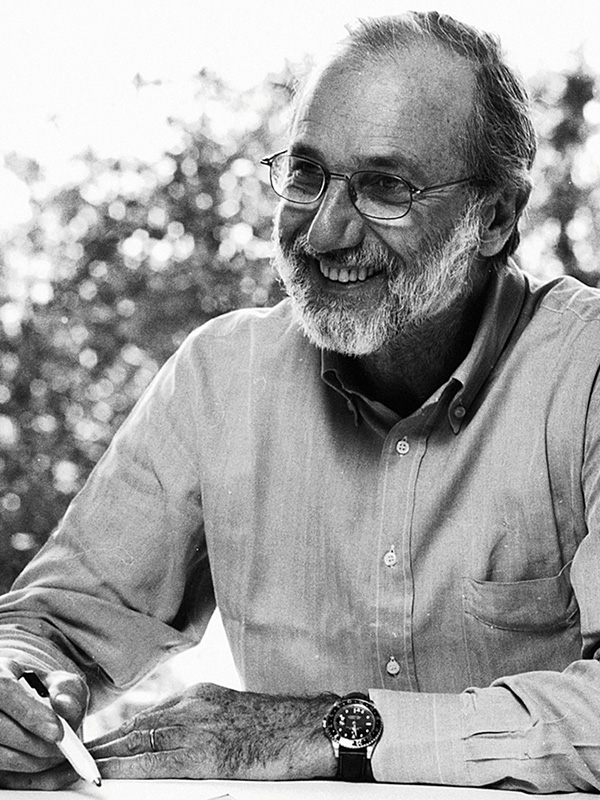
The years between 1965 and 1970 were marked by travels to Britain and the United States for work and research. It was then that he met Jean Prouvé, forging a friendship that would eventually have a profound influence on his professional life.
In 1970, he founded Piano & Rogers with Richard Rogers, his partner on the Centre Pompidou project in Paris. In 1977, he opened the Atelier Piano & Rice together with engineer Peter Rice, a professional figure who would remain his business partner for many years, working with him on many projects until his death in 1993.
He then founded the Renzo Piano Building Workshop, with offices in Paris and Genoa and New York a 100-strong staff made up of architects, engineers, specialists, etc.
His main projects include: the Centre Georges Pompidou, with Richard Rogers (Paris, 1977); The Menil Collection museum (Houston, 1987); the San Nicola football stadium (Bari, 1990); the Renzo Piano Building Workshop (Genoa, 1991); aquarium and congress hall (Genoa, 1992); Lingotto Congress-Concert Hall (Turin, 1994); the Méridien Hotel at Lingotto and Business Center (Turin, 1995); Kansai International Airport (Osaka, 1994); the Debis building, headquarters of Daimler- Benz (Potsdamer Platz-Berlin, 1997); Jean-Marie Tjibaou Cultural Centre (New Caledonia, 1998); the Ferrari wind tunnel (Maranello-Modena, 1998); high-rise offices and apartments blocks (Sydney, 200); Maison Hermès (Tokyo, 2000); the Parco della Musica auditorium (Rome, 2002); the Giovanni e Marella Agnelli Art Gallery at Lingotto (Turin, 2002); the Nasher Sculpture Centre (Dallas, 2003); the Padre Pio pilgrimage church (San Giovanni Rotondo-Foggia, 2004); Zentrum Paul Klee (Bern, 2005); the New York Times Building (2007), the new California Academy of Sciences building in San Francisco (2008); the Shard London Bridge skyscraper (2012);
Extension of the Art Institute of Chicago (2009); extension of the Isabella Stewart Gardner Museum (Boston, 2012); extension of the Kimbell Art Museum (Fort Worth, 2013); Whitney Museum of American Art (New York, 2015); Cultural Center of the Stavros Niarchos Foundation (Athens, 2016); Botín Center (Santander, 2017); new Court of Paris (2017); new Campus for Columbia University New York, 2016).
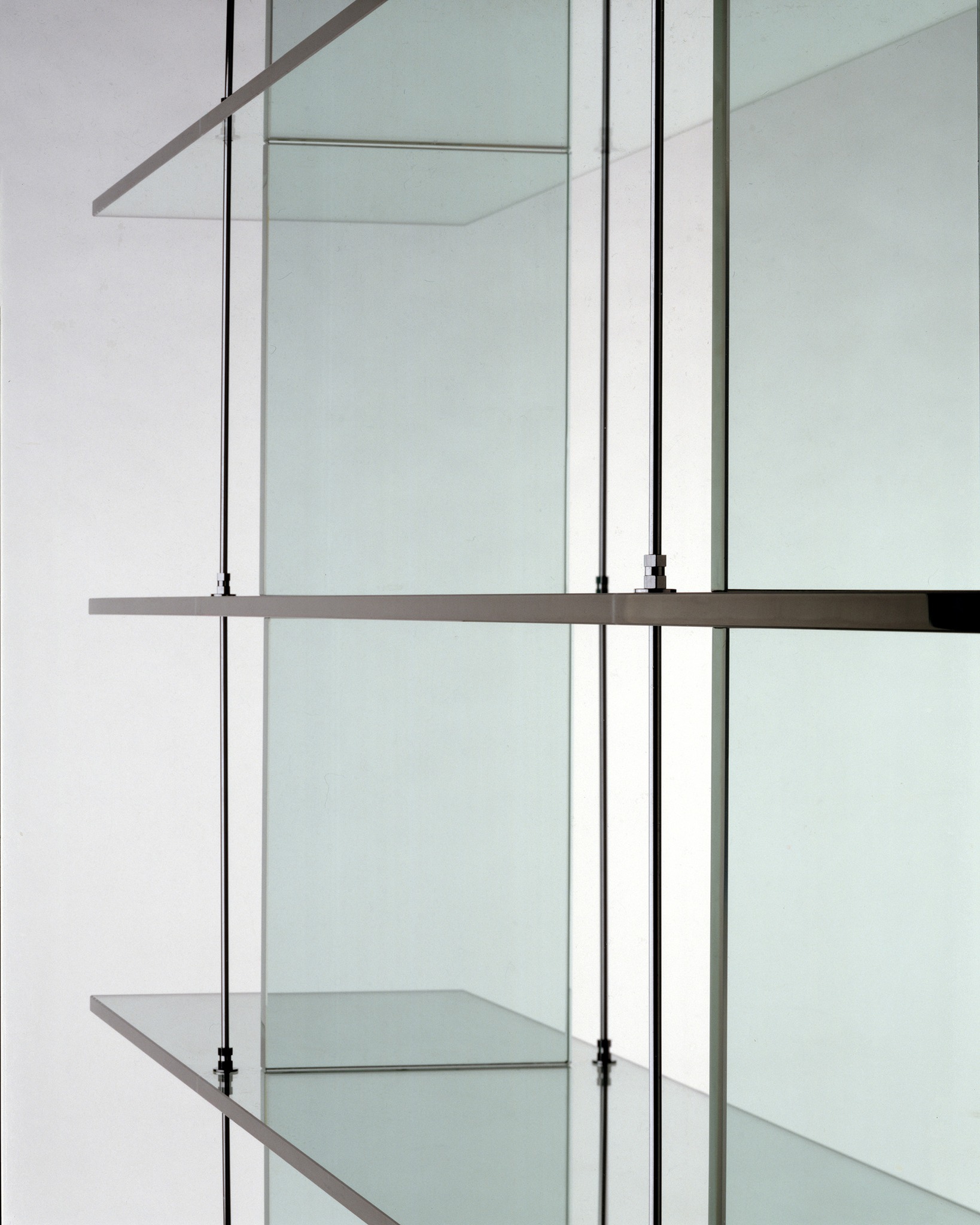
He has received several awards and honours of international importance. On 4 September 2013 the architect Piano was nominated Life Senator by the President of the Republic Giorgio Napolitano. In the second half of the 1980s he designed the Teso series for FontanaArte, made up of a table, bookcase and console. Furnishing objects with an extraordinary personality, which use glass as the main raw material becoming single blocks thanks to a supporting structure of metal rods.
INFORMATION
PRODUCT TYPE
Consolles And Bookcases
SKU
F443710100BIWL
BRAND
FontanaArte
COLLECTION
Teso
PRODUCTION
Made in New York
DESIGNER
Renzo Piano
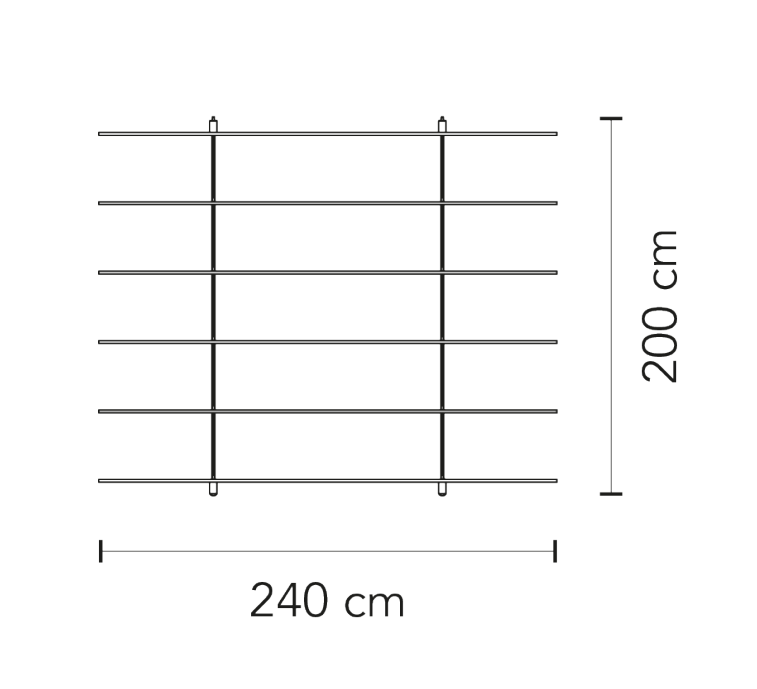
DIMENSIONS
- Height : 200 cm
- Lengrh : 240 cm
STRUCTURE
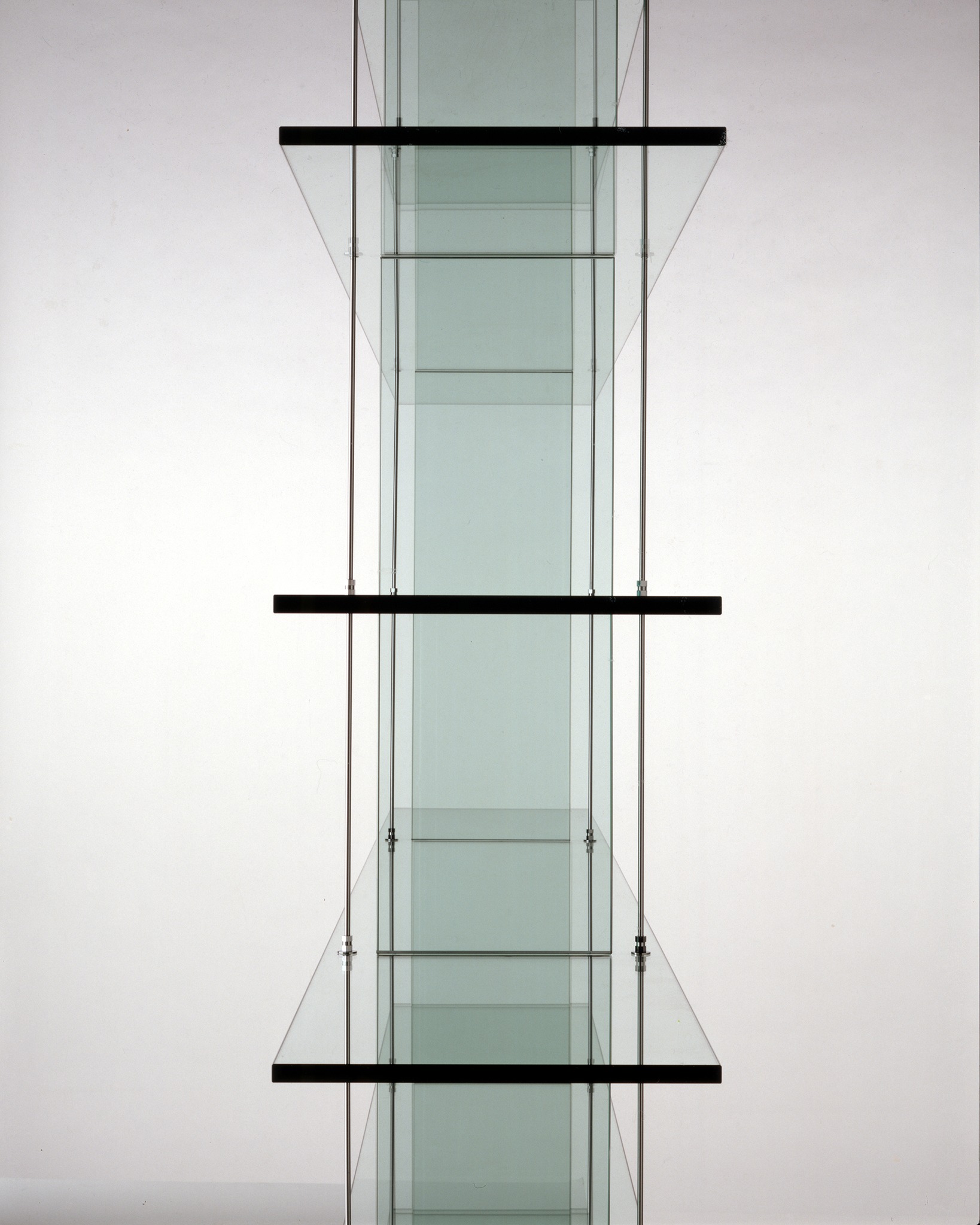
Piano approaches the project with the same mindset as architecture, applying construction logics similar to those used in his buildings, such as the New York Times Building in New York: a system based on tension rods and glass plates that gives shape to a family of tables, a console, and a bookcase conceived under conditions of balance and structural tension.
FEATURES
The tension rods become the connecting and stabilizing element of the entire system, linking essential glass components reduced to their minimum expression: prisms, circular tops for the tables, and rectangular surfaces for the bookcase and console. The result is a system that reads as a true domestic architecture, where lightness and structural transparency are combined with rigorous design thinking.
MATERIAL
Glass & Metal
PRODUCTION YEAR
1989
NOTES
Bookcase open on two fronts. Shelves and uprights made of float-glass. Chromed metal ties.
DOWNLOADS
↓ Technical Data
↓ 2D.dwg
DETAIL
Teso is thus a timeless system—elegant and discreet, yet strongly present in space—capable of adapting naturally to different contexts while preserving its formal and constructive identity.
